Knowledge Base

E-waste treament modelling
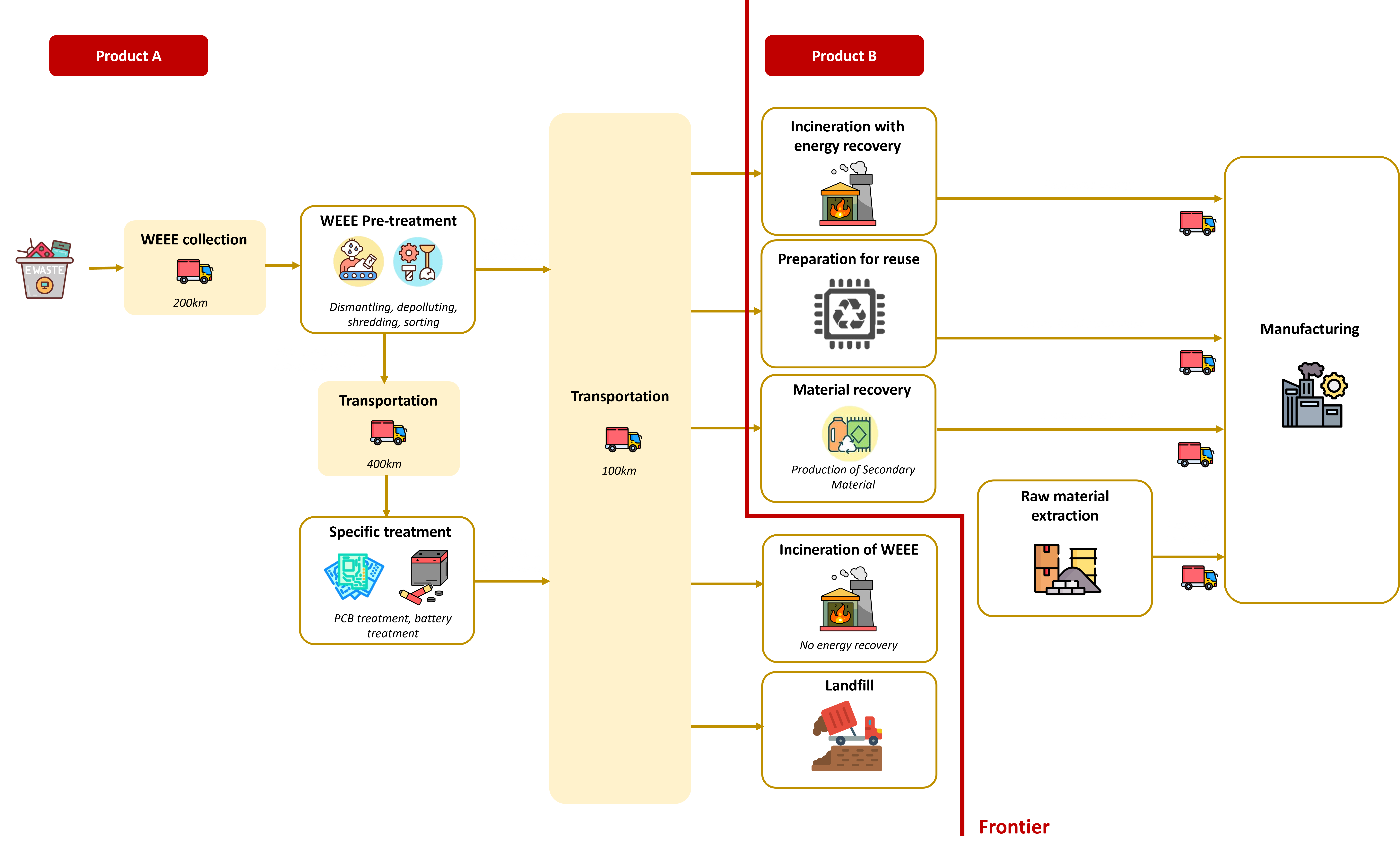
Modelling the e-waste route step-by-step
It is rarely easy to gather end-of-life data and identify which elements and mass go to recycling, reuse, incineration, landfill.
You can consider than: parts in Aluminium, Copper or Steel will go to recycling, polymers to incineration with energy recovery (plastic frow WEEE is poorly recycled).
You can also try different scenarios to see how the final results would be affected. In general, systems End-of-Life does not contribute much to the impacts (not always true with batteries), so it is a good idea to model first the worst case scenario, and if it comes out as a significant contributor refine the model.
In practice, here is how you should model the End-of-Life route of your system.
Step 1: Data collection to the WEEE pre-treatment center

This is done by road transportation, you can use that Transport dataset from the tool. In the absence of data you can consider a distance of 200km.
Step 2: Pre-treatment of WEEE
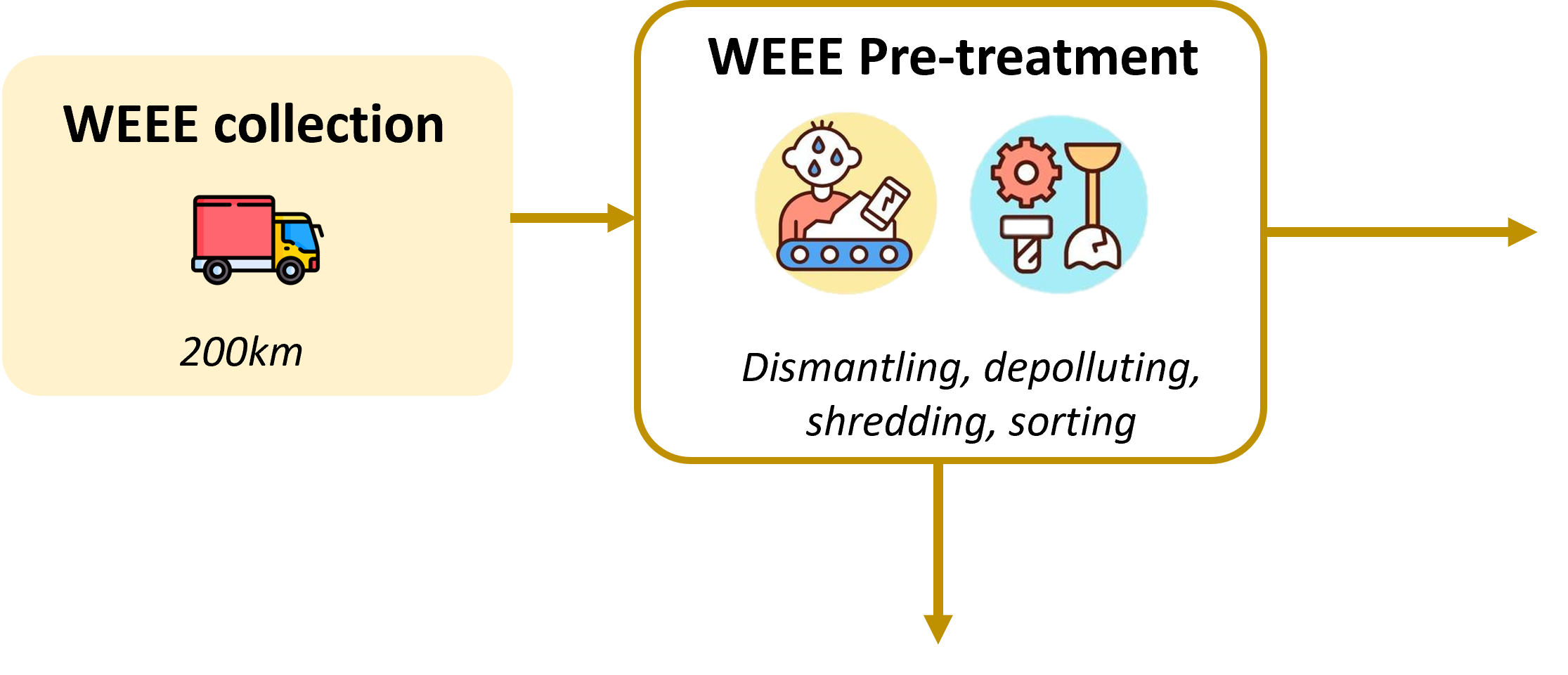
The system is dismantled, polluants isolated, main elements are sorted, sometimes the system gets shredded to help for material preparation.
- Eventually, the PCB, batteries and cables are sorted to be sent to specific treatments.
- Some components in good state could be sent to reuse.
- Other elements like casing (Aluminium, Steel, Plastics) or heatsink can directly be sent to recycling, incineration or landfill (if not sent to reuse).
Step 3: Transportation of sorted materials/components after pre-treatment when no specific treatment is needed
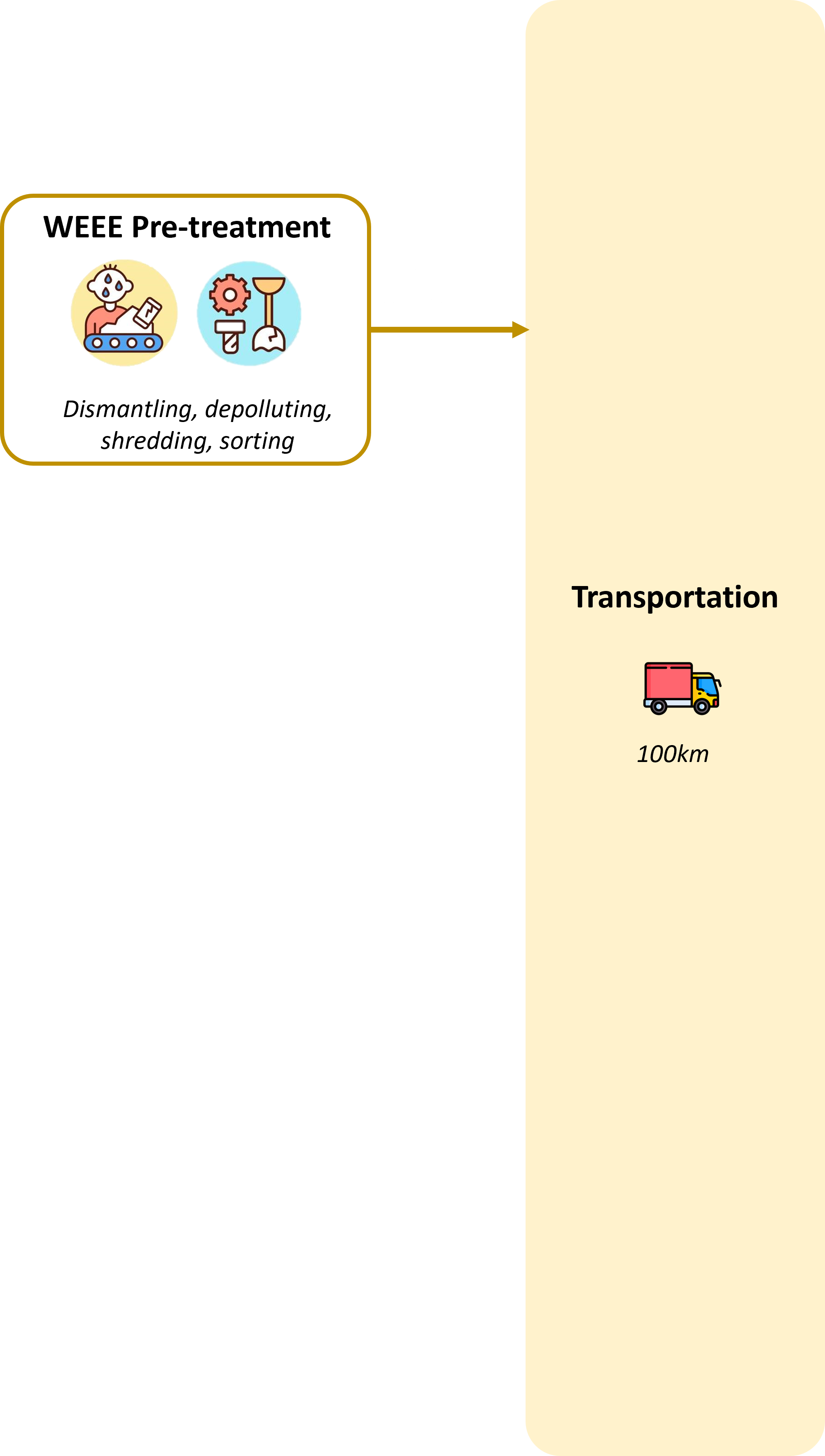
Elements that do not need specific treatment are transported to their reuse/recycling/energy recovery/incineration without energy recovery/landfill facility. This is done by road transportation. You can use the Transport dataset from the tool to model it. In the absence of data you can consider a distance of 100km. You also need to add the mass of all the elements to transport.
For these elements, you can directly jump to Step 7.
Step 4: Transportation of parts to specific treatments after pre-treatment
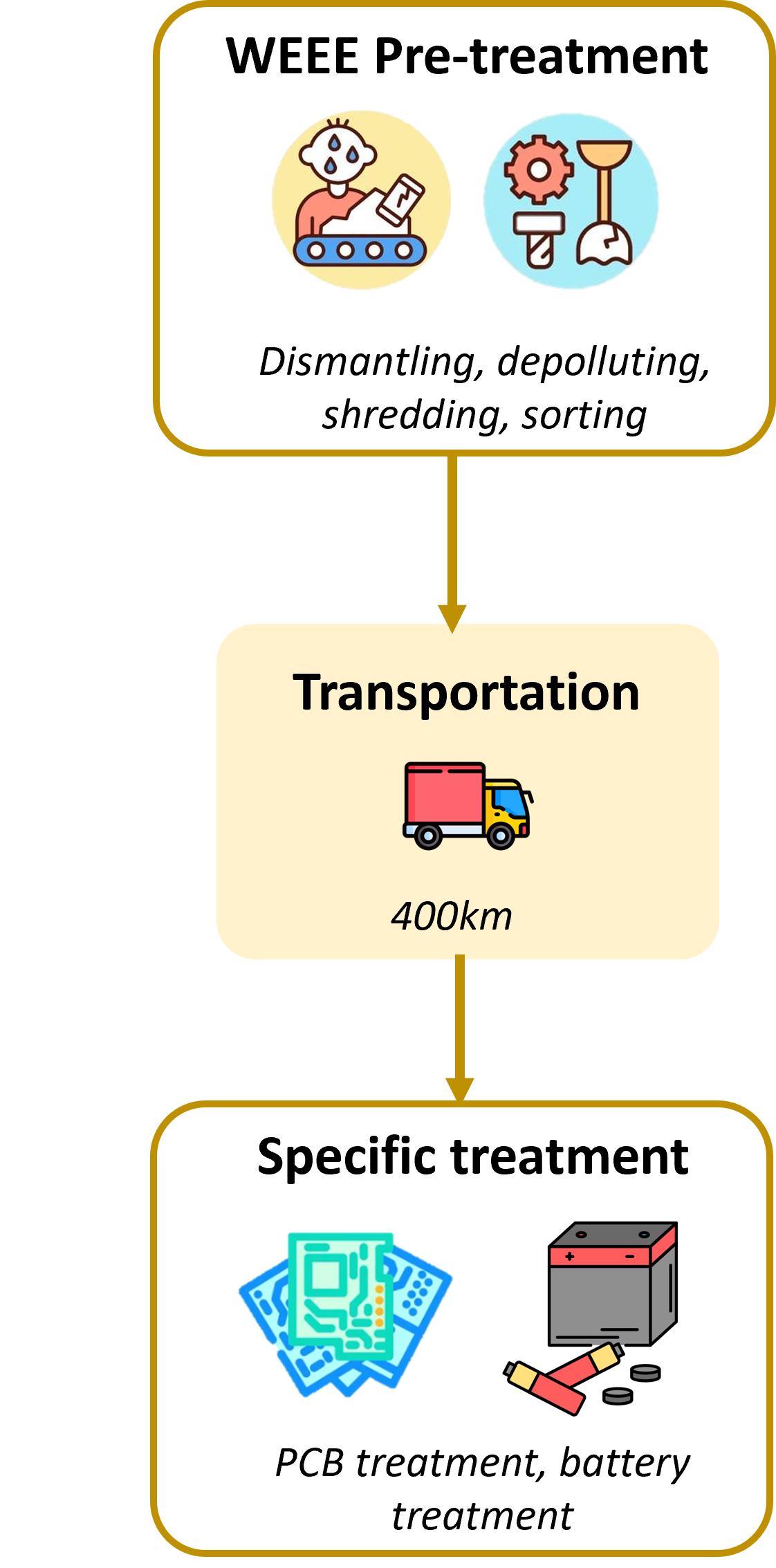
Elements needing specific treatment such as PCBs, batteries are sent to treatment facility. This is done by road transportation. You can use the Transport dataset from the tool to model it. In the absence of data you can consider a distance of 400km. You also need to add the mass of all the elements to transport.
Step 5: Specific treatments
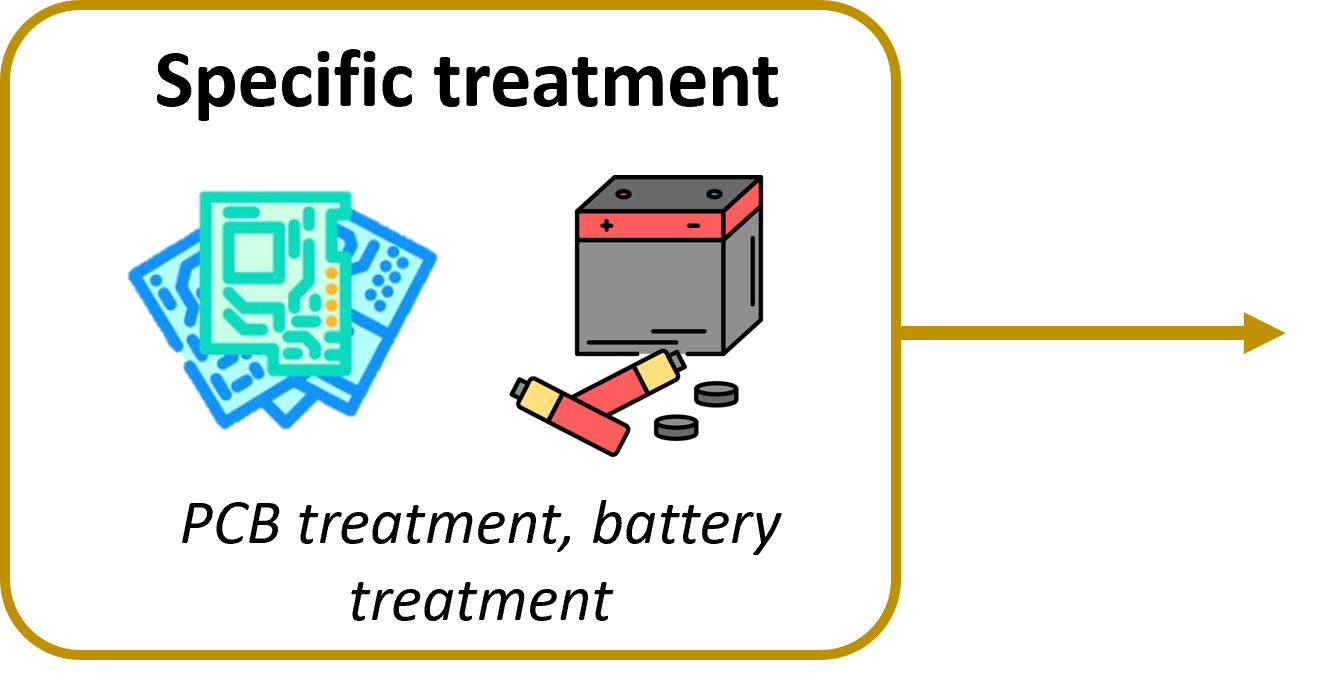
For the specific treatment you can use the following datasets:
- Mounted PCB Waste Treatment
- Battery Waste Treatment
Step 6 : Transportation of materials after specific treatment
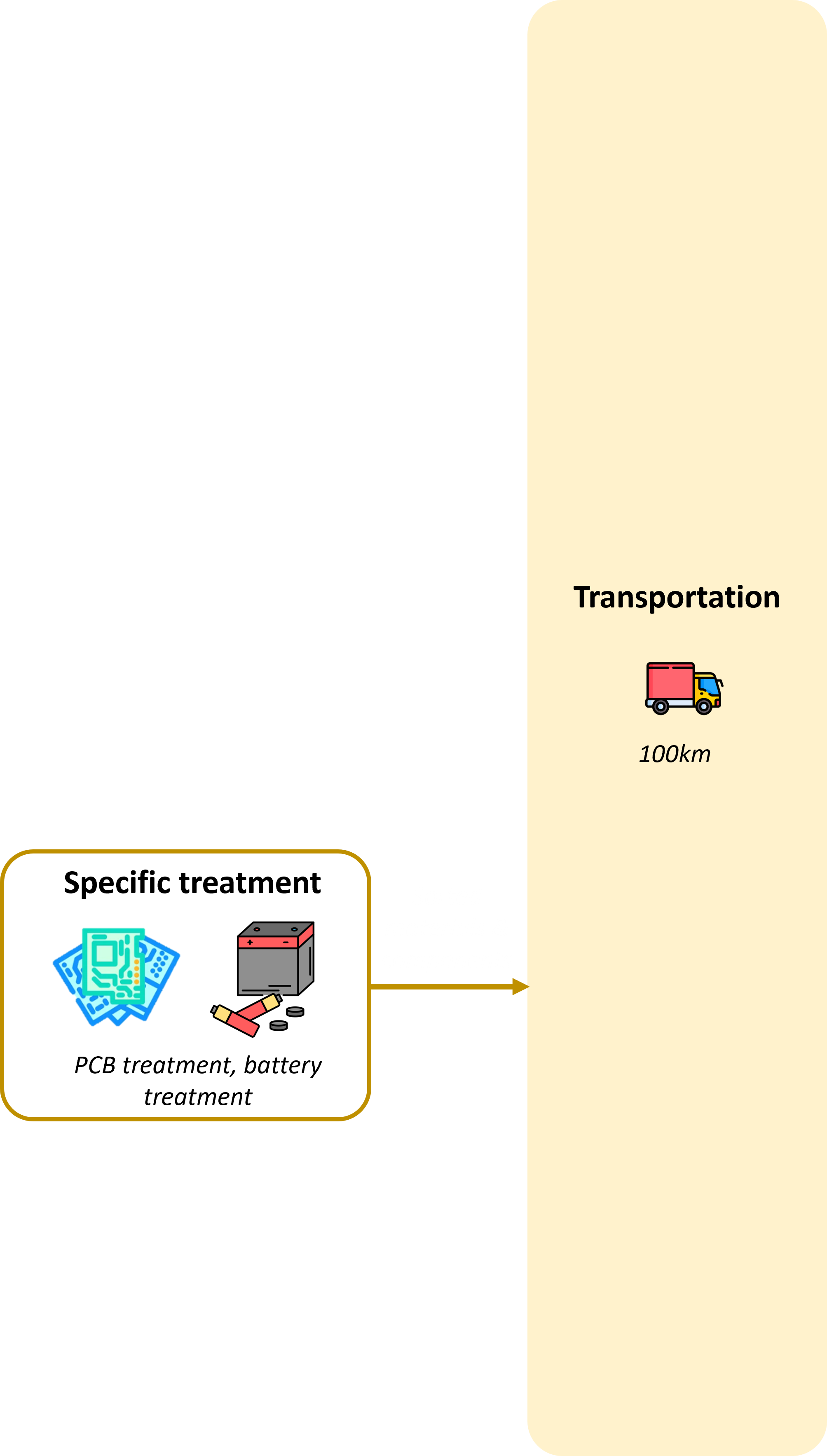
After the specific treatment , the materials and components sorted can now be sent either to reuse/recylcing/ incineration with energy recovery/incineration without energy recovery/ landfill. This is done by road transportation. You can use the Transport dataset from the tool to model it. In the absence of data you can consider a distance of 100km. You also need to add the mass of all the elements to transport.
Step 7: Final treatment of sorted materials/components

For the elements going to landfill or incineration without energy recovery you can use the following datasets:
- Electronics Landfill
- Electronics Incineration
- Reuse
- Recycling
- Energy recovery
- (Cut-off) Incineration with energy recovery
- (Cut-off) Recycling
- (Cut-off) Preparation to reuse